
Services for the solar trade

Warehousing & fulfillment

Forward-stocking locations, kitting and vendor-managed inventory that position equipment closer to the job and reduce partial-shipment delays.

Warehousing & Fulfillment

Warehousing & fulfillment

FSLs, kitting, pre-assembly and VMI.

Faster deliveries, fewer stalled crews

Cut lead time on rush reorders

Forward-stocked inventory near active project regions turns a rush order into a regional delivery instead of a cross-country one.

Reduce partial-shipment delays

Kitting bundles a project's full bill of materials into one delivery instead of staggered arrivals that stall a crew.
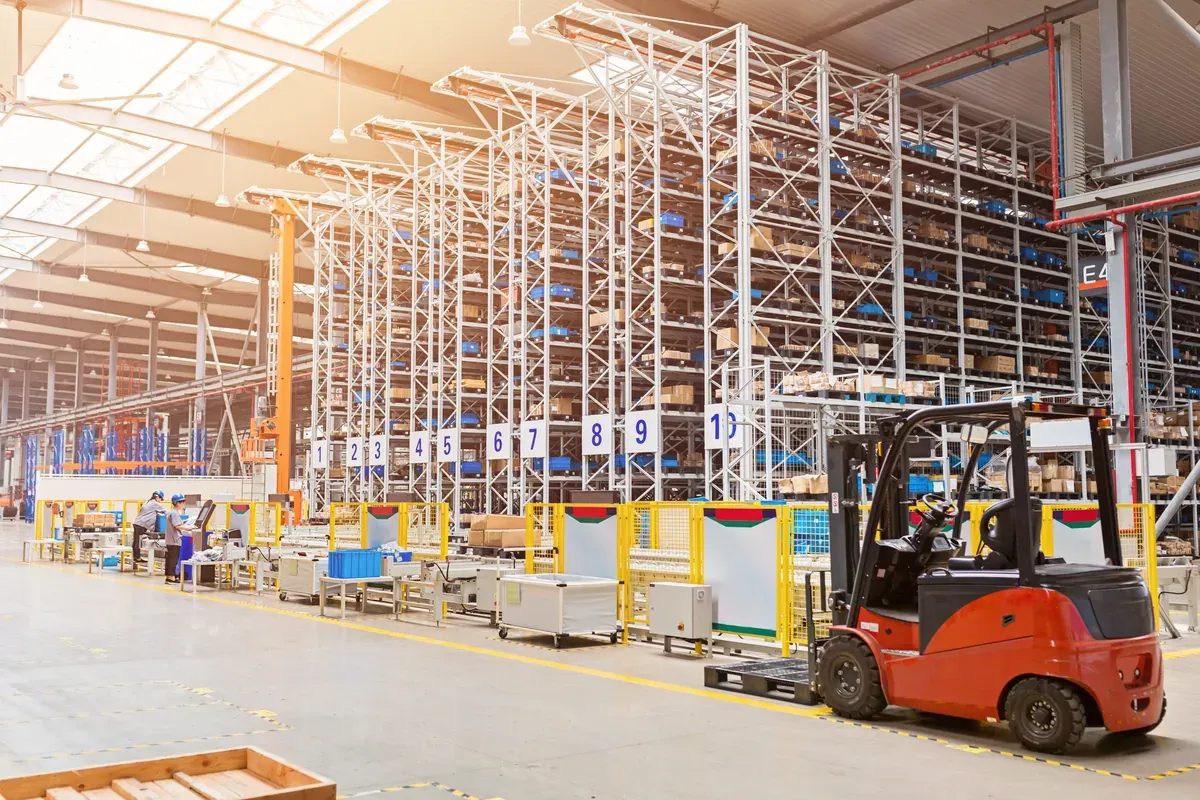
Forward Stocking Locations

Forward Stocking Locations

Regional inventory positioned near active project markets, cutting rush-reorder lead time from a cross-country shipment to a regional one.

How regional stocking positions inventory

Inventory positioned where projects actually are

Stock sits in regional facilities near active installation markets rather than a single national distribution center, which is what turns a rush reorder into a same-region delivery instead of a multi-day cross-country shipment.

Focused on fast-moving SKUs

Forward stocking prioritizes the racking, BOS and other high-turn components that installers reorder most often, rather than every SKU in the catalog.

Visibility into what's actually on the regional shelf

Stock levels at each forward location are visible before a reorder is placed, so a buyer knows whether a rush request can actually be filled locally.

Rush reorders filled locally

Cut rush-reorder time from days to hours

Regional stock turns a cross-country shipment into a local delivery for a crew that ran short mid-project.

Know what's available before ordering

Regional stock visibility replaces a phone call to confirm availability.

Kitting & Pre-assembly

Kitting & Pre-assembly

A full bill of materials for a specific project kitted into one coordinated delivery instead of components arriving on separate trucks.

How project kits get built

One kit per project, not one shipment per component

A project's full bill of materials, modules, racking, BOS and everything in between, gets packed and labeled as one coordinated kit instead of arriving as separate line items on separate trucks over several days.

Pre-assembly where it saves field time

Where practical, BOS subassemblies get built before shipping, cutting the component-by-component assembly a crew would otherwise do on site.

Fewer missing-part surprises

Kitting against a project's exact bill of materials catches a shortage before the kit ships, instead of a crew discovering a missing part mid-installation.

One coordinated delivery per project

Stop waiting on staggered component shipments

A kitted delivery arrives as one coordinated shipment instead of components trickling in over days.

Catch shortages before the crew does

Kit verification against the bill of materials happens before shipping, not on site.

Vendor Managed Inventory

Vendor Managed Inventory

Consigned stock that auto-replenishes against usage data, keeping shelves stocked without manual reorder cycles.

How vendor-managed stock replenishes

Auto-replenishment against real usage

Stock levels get monitored against actual consumption, triggering replenishment orders automatically instead of relying on a distributor's team to notice a shelf running low.

Consigned stock, cash flow preserved

Consignment structures mean inventory sits on a distributor's shelf without tying up capital in ownership until it's actually sold or used.

Focused on fast-moving categories

VMI applies most effectively to high-turn SKUs like racking and common BOS components, where predictable usage patterns make auto-replenishment reliable.

Replenishment without manual tracking

Stop manually tracking reorder points

Auto-replenishment triggers against usage data instead of a manual shelf check.

Free up capital tied to on-hand inventory

Consignment keeps stock available without committing cash to ownership before it's needed.

Cross-docking

Cross-docking

Consolidated freight that moves straight through a facility to outbound delivery, cutting storage time for equipment already committed to a project.

How cross-docking moves freight through

Freight consolidated, not stored

Shipments from multiple suppliers arrive at a facility and move straight through to outbound delivery, consolidated into fewer trucks instead of sitting on a shelf waiting for the rest of an order to arrive.

Built for time-sensitive, multi-supplier orders

Cross-docking suits orders where equipment from several suppliers needs to arrive at a project as one coordinated delivery on a defined schedule, not equipment headed for longer-term storage.

Faster than a standard warehouse cycle

Skipping the put-away and pick cycle of standard warehousing cuts the time between a shipment's arrival and its delivery to the final destination.

One delivery, no storage cycle

Consolidate multi-supplier orders into one delivery

Freight from different suppliers merges at the cross-dock instead of arriving at a site in separate shipments.

Move equipment faster than standard storage allows

Skipping the storage cycle shortens the time from arrival to delivery.

Returns Processing

Returns Processing

Structured RMA handling for defective or excess equipment, so a return doesn't sit unresolved between a buyer and a manufacturer.

How equipment returns get processed

A structured RMA process, not an open-ended dispute

Defective equipment returns move through a defined return-merchandise-authorization process, with clear steps and timelines instead of an unresolved back-and-forth between buyer and manufacturer.

Excess inventory returns, not just defects

Unused, excess equipment from an overordered or cancelled project can move through the same structured returns channel rather than sitting as a written-off cost.

Coordinated with manufacturer warranty

Where a return is warranty-related, processing coordinates directly with the manufacturer's warranty terms instead of leaving a buyer to manage two separate conversations.

Resolved returns, recovered value

Resolve returns on a defined timeline

Structured RMA processing replaces an open-ended dispute with clear steps and expectations.

Recover value from excess inventory

A defined returns channel gives overordered equipment a path back instead of becoming dead stock.

Inventory Visibility

Inventory Visibility

Real-time stock data across warehousing locations, visible before a reorder is placed instead of requiring a phone call to confirm.

What real-time stock data shows

Real-time stock levels, not a static report

Inventory data reflects current stock across warehousing locations, so a buyer planning a reorder can see actual availability instead of a snapshot that's already out of date by the time it's checked.

Visibility across owned and vendor-managed stock

Both directly held inventory and consigned, vendor-managed stock show up in the same view, giving a full picture instead of two separate systems to check.

Data that feeds planning, not just a lookup

Stock trends and turn rates support reorder planning, not just a single point-in-time availability check.

Reorder from data, not guesses

Skip the phone call to confirm availability

Real-time data answers the availability question before a reorder call is even needed.

Plan reorders from trend data, not a guess

Stock trend visibility supports proactive reorder timing instead of reactive restocking.

Guides for your next decision

Your questions, answered.

What's the difference between forward stocking and standard warehousing?
Standard warehousing centralizes inventory in one location, while forward stocking positions equipment in locations closer to your active jobs. That proximity cuts transit time on reorders and reduces the delays that come from shipping everything from a single distant hub. It is what lets a rush reorder reach the site quickly.
Can kitting combine equipment from multiple suppliers into one delivery?
Yes. Kitting and pre-assembly can consolidate components from multiple suppliers into a single job-ready package, so the crew receives one coordinated delivery instead of chasing partial shipments from different vendors. That reduces partial-shipment delays and the staging work on site.
How does vendor-managed inventory reduce the risk of a stockout?
With vendor-managed inventory, stock levels are monitored and replenished against your usage before they run out, rather than waiting for you to notice a shortage and place a rush order. Pairing that with inventory visibility and forward stocking means fast-moving items stay on hand, so a reorder does not turn into a stalled job.
How does a forward stocking location reduce lead time on a rush order?
A forward stocking location holds inventory near active project markets, so a rush reorder ships regionally instead of cross-country. That turns a multi-day transit into a same-region delivery, cutting rush-reorder time from days toward hours. Knowing what is on the regional shelf before ordering also avoids the delay of sourcing from a distant warehouse.
Which regions typically have forward-stocked solar inventory?
Forward stocking is positioned near active project markets, so inventory sits where installation volume actually is rather than in every region uniformly. The specific locations track where demand concentrates and shift as markets move. Checking regional availability before ordering shows what is on the shelf nearest a given project.
More questions about these services
Is forward stocking limited to fast-moving SKUs?
Forward stocking focuses on fast-moving SKUs, since those are the items where a rush reorder is most likely and regional stock delivers the biggest lead-time gain. Slower or specialized items are generally sourced through standard channels. The platform shows what is actually forward-stocked so you know regional availability before ordering.
What does kitting mean for a solar equipment order?
Kitting means the full bill of materials for a specific project is picked, grouped, and shipped as one coordinated delivery, rather than modules, racking, and BOS arriving on separate trucks at different times. Everything the crew needs shows up together, staged for that job. It turns a scattered set of component orders into a single, project-ready shipment.
Does kitting reduce errors compared to separate component shipments?
Yes. Because the whole bill of materials is assembled and checked against the project before it ships, shortages and mismatched parts get caught in the warehouse instead of on the roof. That means fewer missing-part surprises, less time lost to partial deliveries, and a crew that can start with everything on hand.
Can kitting include pre-assembly of BOS components?
Yes, kitting can include pre-assembly of balance-of-system components where doing it in the warehouse saves field time, such as sub-assembling certain hardware before it ships. What makes sense to pre-assemble depends on the project and how the crew works. The goal is to move labor off the job site when it is faster and more controlled to do it beforehand.
How does vendor-managed inventory differ from a standard purchase order model?
Under a standard purchase order model, you forecast demand, track reorder points, and cut a PO each time stock runs low. With vendor-managed inventory, stock is consigned and auto-replenishes against your actual usage data, so the supplier maintains agreed levels without you issuing manual reorders. That shifts the reordering work off your team and reduces stockouts on fast-moving items.
Who owns consigned stock before it's used?
With consigned VMI stock, the supplier retains ownership of the inventory sitting on your shelves until it is drawn for use, at which point it converts to a sale. That is what preserves your cash flow, since capital is not tied up in on-hand stock you have not yet consumed. Exact ownership transfer terms are set in the VMI agreement.
Does VMI work for fast-moving SKUs or the full catalog?
VMI is best suited to fast-moving, predictable SKUs, where steady usage data drives reliable auto-replenishment and the reduction in manual reordering pays off most. Slow-moving or one-off items are usually better handled through standard purchase orders, so most programs focus VMI on the high-velocity categories rather than the full catalog.
What is cross-docking and how does it differ from standard warehousing?
Cross-docking moves inbound freight straight through a facility to outbound delivery with little or no storage in between, where standard warehousing holds inventory until it is later picked and shipped. It suits equipment already committed to a project, cutting storage time and handling. The trade-off is that it depends on tight inbound and outbound coordination.
Does cross-docking save time on multi-supplier deliveries?
Yes. Cross-docking consolidates freight arriving from several suppliers and sends it back out as one coordinated delivery, so the project receives a single shipment instead of waiting on staggered arrivals. That moves committed equipment faster than a standard store-and-pick warehouse cycle.
Is cross-docking used mainly for large, time-sensitive orders?
It is most valuable for time-sensitive, multi-supplier orders where equipment is already committed to a project and storage time is wasted time. Order size matters less than urgency and the need to consolidate several inbound shipments into one outbound delivery, though larger orders often fit that profile.
How does an RMA process work for defective solar equipment?
An RMA gives a defective return a structured path, authorizing the return, coordinating with the manufacturer, and moving it toward resolution on a defined timeline. That keeps a defect from stalling between the buyer and the manufacturer. Instead of an open-ended dispute, the return follows clear steps to a conclusion.
Can excess or unused inventory be returned through the same process?
Yes, returns processing handles excess or unused inventory, not only defective units. Structured handling lets you recover value from stock you overbought rather than leaving it stranded. Return terms for excess depend on the item and supplier, so those conditions are confirmed as part of the process.
Does returns processing coordinate with manufacturer warranty claims?
Yes, when a return involves a warranty defect, the process coordinates with the manufacturer's warranty channel so the claim and the physical return move together. That avoids a buyer chasing the manufacturer separately while the equipment sits unresolved. Keeping warranty and RMA aligned drives the return to a defined outcome.
How current is inventory visibility data across warehousing locations?
Inventory visibility shows real-time stock levels across warehousing locations rather than a static report that ages the moment it is generated. That means you can confirm availability before placing a reorder instead of making a phone call to verify what is actually on the shelf.
Can inventory visibility integrate with a buyer's own procurement system?
The data is built to feed planning rather than serve only as a manual lookup, which supports connecting stock levels into a buyer's own procurement workflow. Specific integration depends on the systems involved, so confirm the connection method for your setup with Sunhub.
Does visibility cover both owned and vendor-managed inventory?
Yes. Visibility spans both owned stock and vendor-managed inventory, so you see availability across the full supply picture rather than just one location. That fuller view lets you plan reorders from trend data instead of guessing at what a vendor is holding.

Plan the next step for your business

Tell our team what you need, and explore the Sunhub services that fit your business.

Talk to a specialist