Services for the solar trade

Custom fabrication

Custom brackets, enclosures, cables and skid-mounted assemblies built to a project's spec when a catalog part doesn't fit.
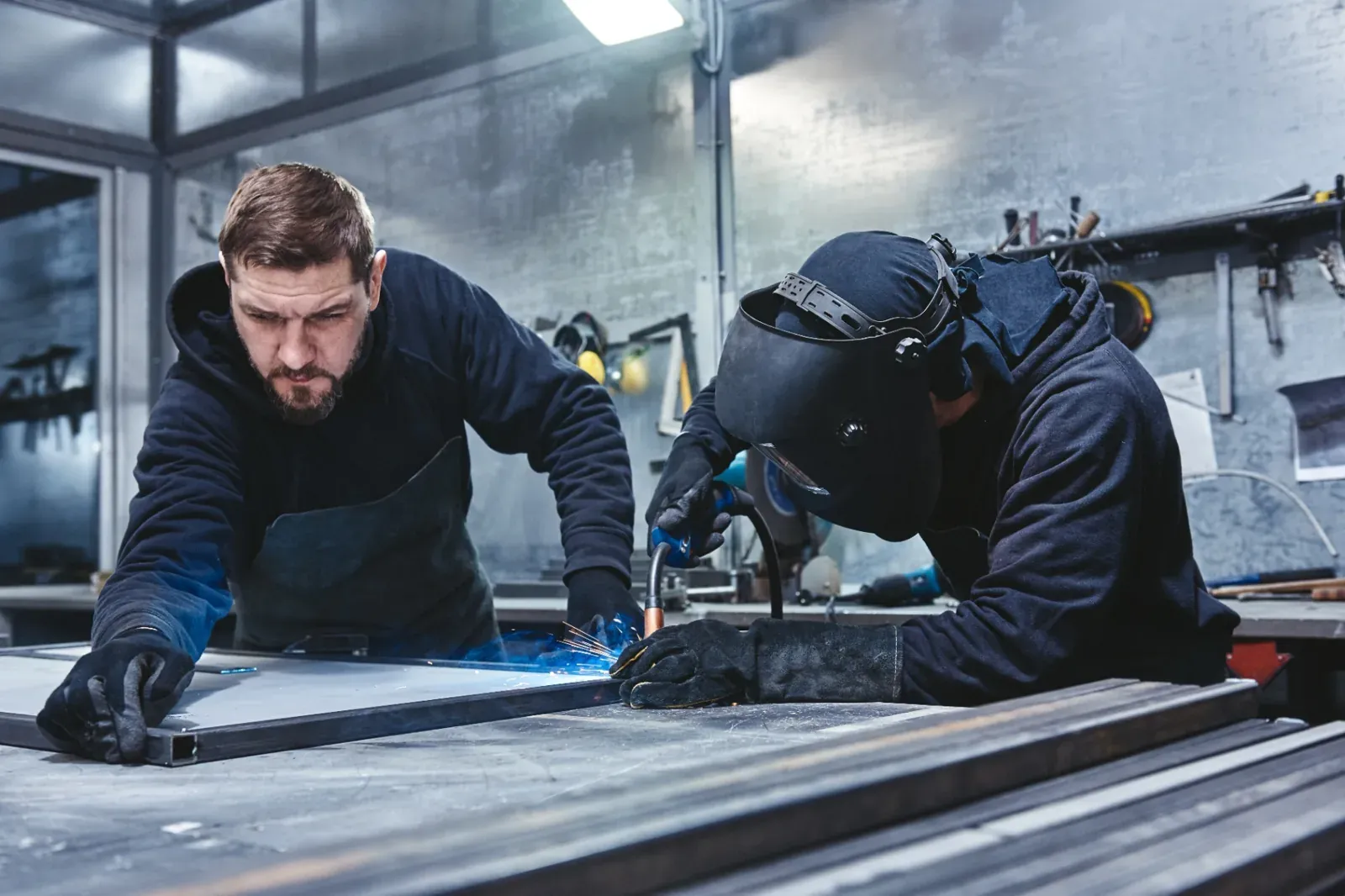
Custom Fabrication

Custom fabrication

Metalworking and bespoke structural builds.

Parts that fit and pass inspection

Get the part that actually fits

Custom fabrication solves the mounting, routing or enclosure problem a catalog part can't, instead of forcing a design change to fit off-the-shelf hardware.

Confirm the required documentation

Specify the drawings, materials, tolerances and documentation your project requires. Confirm certifications and inspection responsibilities with the fabricator.
Sheet-metal Brackets

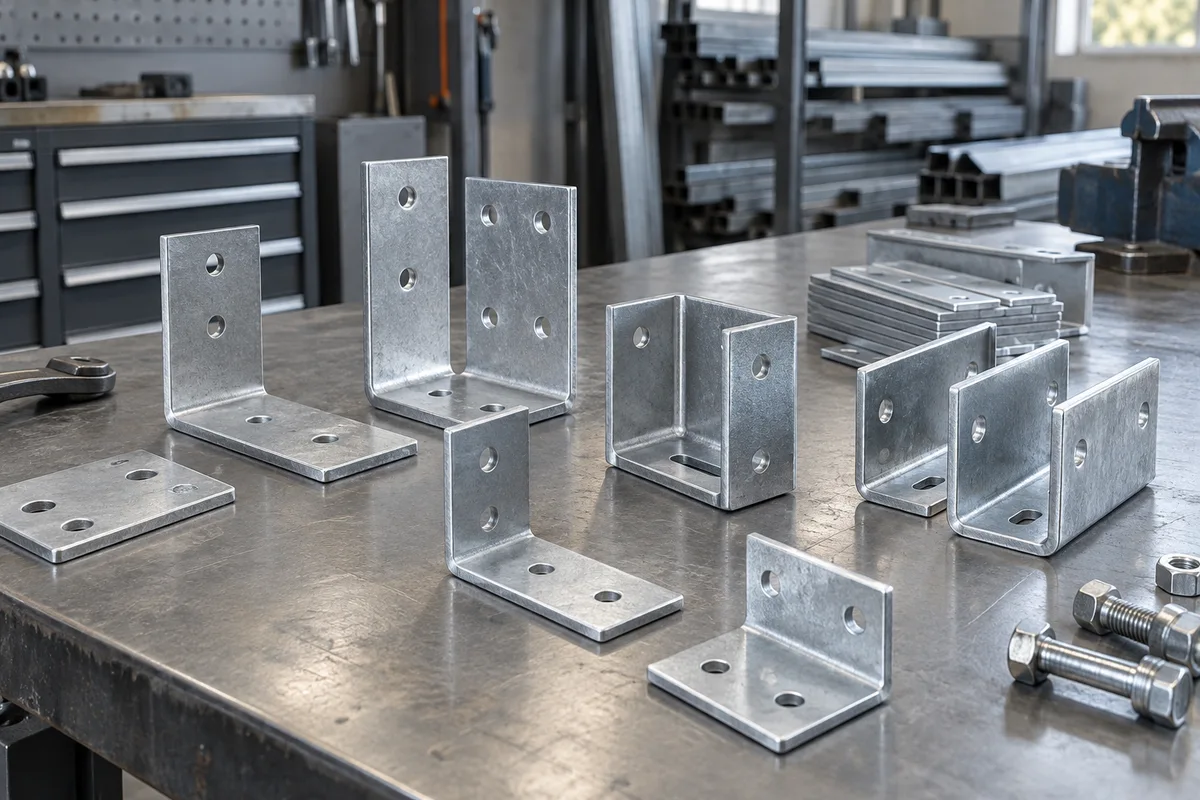
Sheet-metal Brackets

Custom mounting brackets fabricated to a project's specific attachment geometry when a catalog bracket doesn't fit.

Brackets fabricated to your attachment geometry

Fabricated to the actual attachment geometry

Roof profiles, rail spacing and load requirements that don't match a standard catalog bracket get solved with a custom-fabricated part instead of forcing the design to accommodate off-the-shelf hardware.

Material and finish matched to site conditions

Steel, aluminum and stainless options get specified against the site's corrosion exposure and structural load, not a default material choice.

Lead time quoted against the actual run size

Fabrication lead time is quoted against the specific quantity and complexity of a run, so a project can plan installation dates around a real delivery date instead of a catalog assumption.

The right fit and a real lead time

Stop redesigning around a bracket that doesn't fit

Custom fabrication solves the attachment problem directly instead of forcing a workaround.

Know the real lead time before committing

Fabrication timelines are quoted against the actual run, not assumed from a standard catalog lead time.
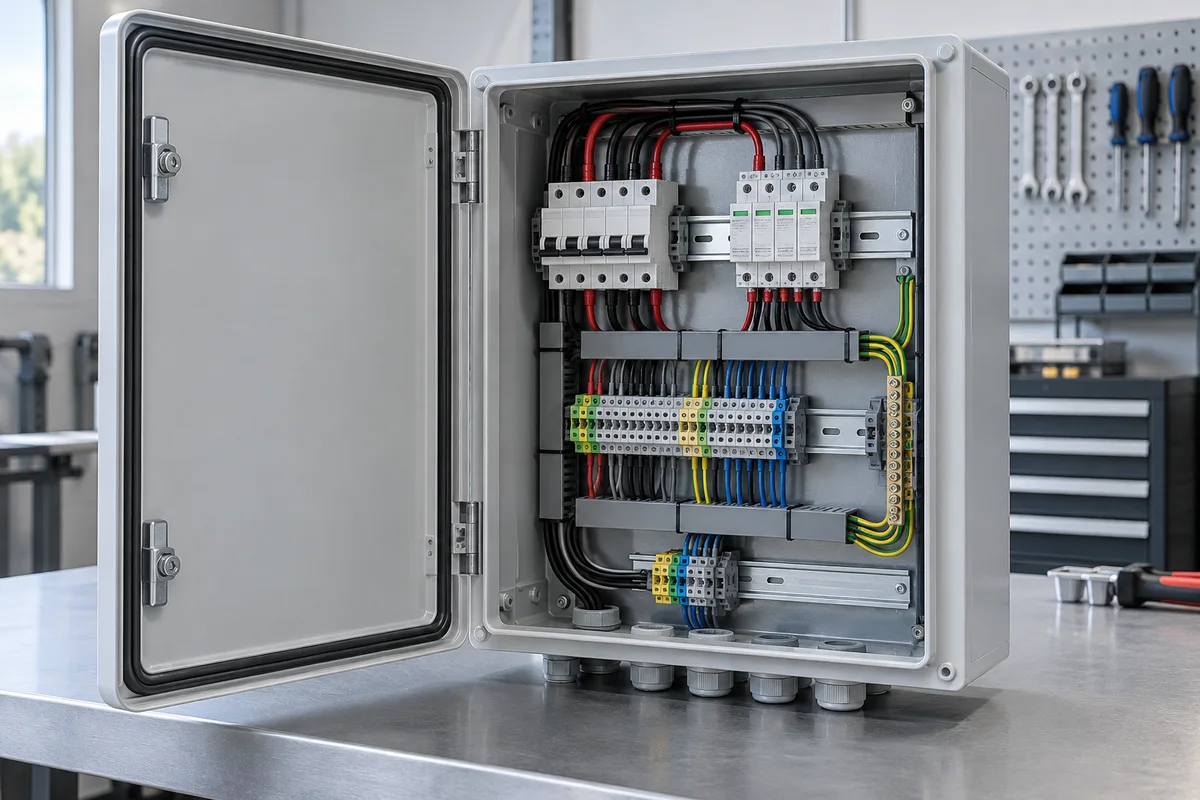
Enclosures & NEMA Boxes

Enclosures & NEMA Boxes

Custom electrical enclosures built to the NEMA rating a site's environment demands, sized to the equipment going inside.

Enclosures rated and sized for your equipment

NEMA rating matched to the environment

Outdoor, wash-down and corrosive environments each call for a different NEMA rating, and enclosures here get specified against the actual site condition rather than a default indoor-rated box.

Sized to the actual equipment

Combiner, disconnect and monitoring hardware get measured and fitted before fabrication, avoiding the field modifications a generic catalog enclosure often needs.

Certified for inspection

Enclosures carry the UL listing and labeling an inspector checks, so a custom fit doesn't come at the cost of code compliance.

No field modifications, correct NEMA rating

Stop field-modifying a catalog enclosure

Custom sizing fits the actual equipment from the start, avoiding cutting and drilling in the field.

Match NEMA rating to the real environment

Enclosure rating gets specified against actual site conditions, not assumed from a standard spec sheet.
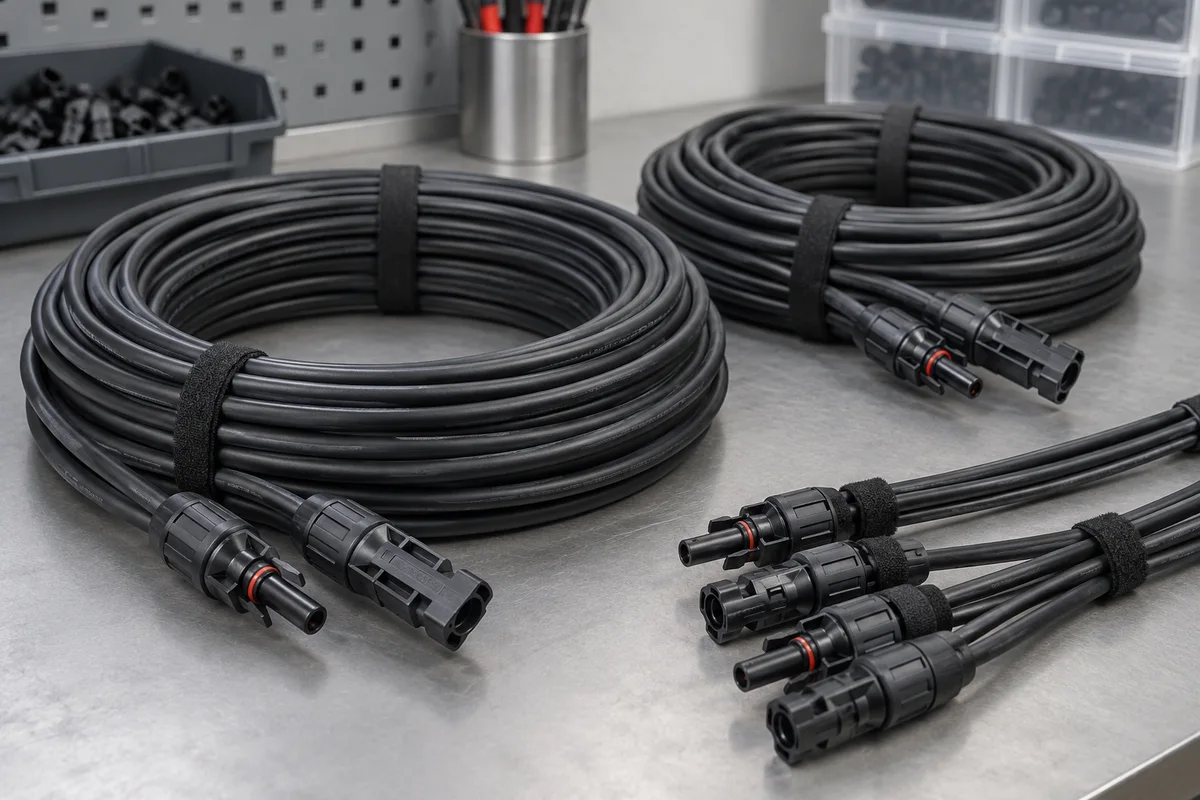
Cable Assemblies

Cable Assemblies

Custom-length cable and wire harness assemblies with the connectors and certifications a project's specific routing requires.

Cable assemblies matched to your routing

Custom lengths for the actual routing

Cable assemblies fabricate to a project's specific run lengths and routing path, cutting the field splicing and excess coiled cable that come with standard pre-cut lengths.

Connector and harness options matched to equipment

Connector types and harness configurations get specified against the exact inverter, combiner and disconnect hardware in the bill of materials, not assumed compatible.

Certified for the environment it's installed in

Outdoor and rooftop-rated cable assemblies carry the certifications an inspector checks, whether that's UV resistance, temperature rating or a specific UL listing.

Less splicing, confirmed connector compatibility

Cut field splicing and excess cable

Custom lengths match the actual run, reducing waste and the splices that become failure points later.

Confirm connector compatibility before it ships

Harness configurations get checked against the actual equipment list, not assumed.
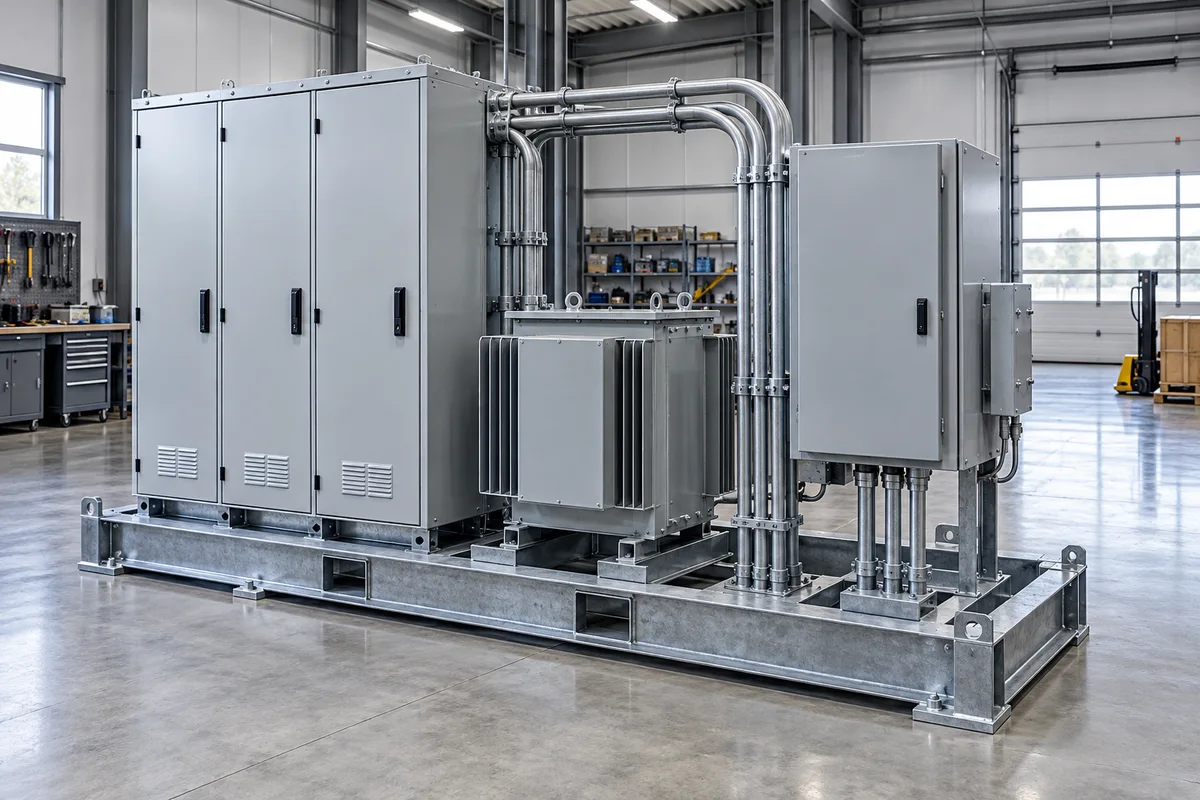
Skid-mounted Systems

Skid-mounted Systems

Pre-assembled, containerized equipment skids that arrive ready to set and connect, cutting field assembly time on a tight schedule.

Pre-integrated equipment skids built in the shop

Pre-integrated in the shop, not the field

Inverters, switchgear and BOS components get mounted, wired and tested on a skid before it ever ships, moving hours of field electrical work into a controlled shop environment.

Containerized options for remote or repeat deployments

Fully containerized configurations suit remote sites or projects deploying the same equipment package repeatedly, where a standardized, transportable unit saves engineering time on every subsequent site.

Customized to the project's equipment mix

Skid layout and components get specified to the actual equipment list a project needs, not a generic pre-built configuration that requires field rework to match.

Less field time, standardized deployments

Cut field assembly time meaningfully

Shop-integrated skids arrive ready to set and connect, instead of hours of field wiring and testing.

Standardize repeat deployments

A validated skid configuration reuses across multiple sites without re-engineering each one from scratch.
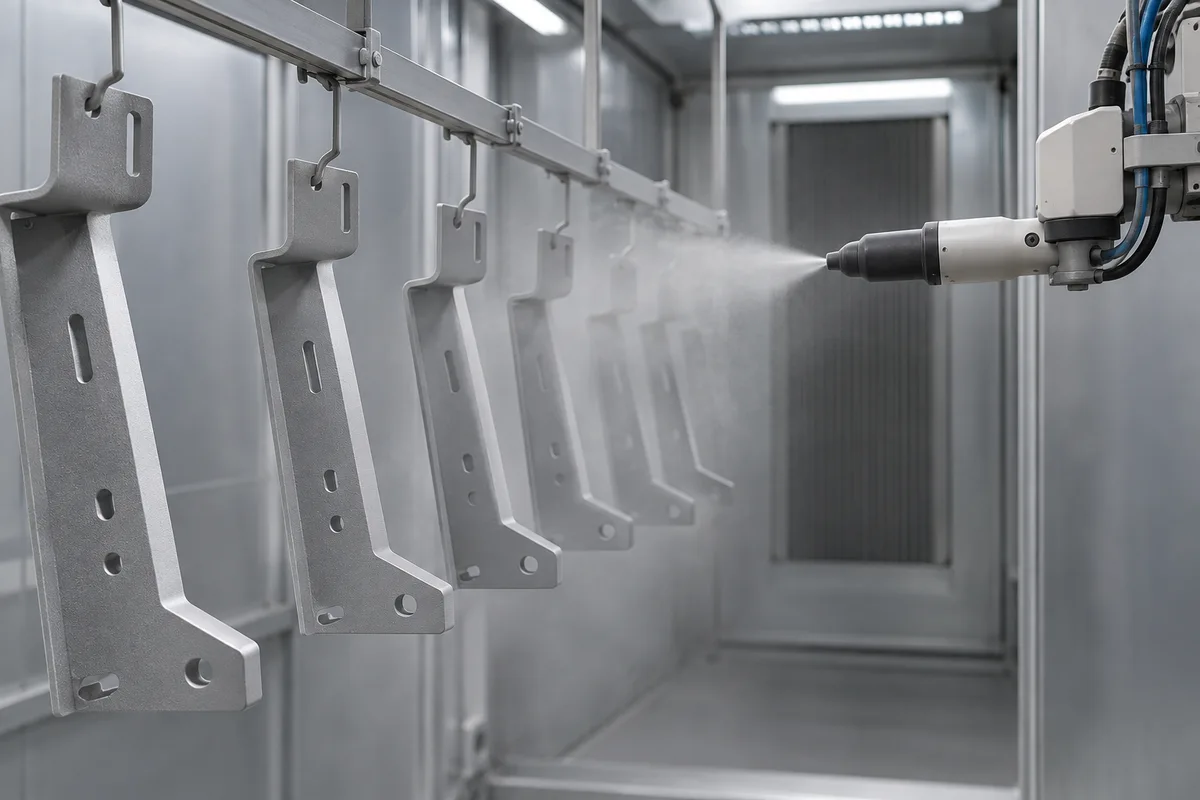
Powder Coating

Powder Coating

Corrosion-resistant coating for steel and aluminum racking components, applied to a project's actual hardware for its actual site conditions.

Coating matched to site corrosion exposure

Coating matched to corrosion exposure

Coastal, agricultural and industrial sites expose steel and aluminum components to corrosion standard galvanization doesn't fully address, and coating options here get specified against the actual site environment.

Applied to the project's actual hardware

Coating runs on the specific brackets, rails and enclosures in a project's bill of materials, not a generic stock finish applied after the fact.

Documented for warranty and durability claims

Coating specification and application data are documented, which matters when a racking manufacturer's structural warranty depends on protective finish being applied correctly.

Longer hardware life, warranty intact

Extend hardware life in harsh environments

Coating gets matched to actual corrosion exposure instead of a one-size finish that underperforms on a coastal or industrial site.

Keep the structural warranty intact

Documented coating application supports a warranty claim instead of creating a gap in it.
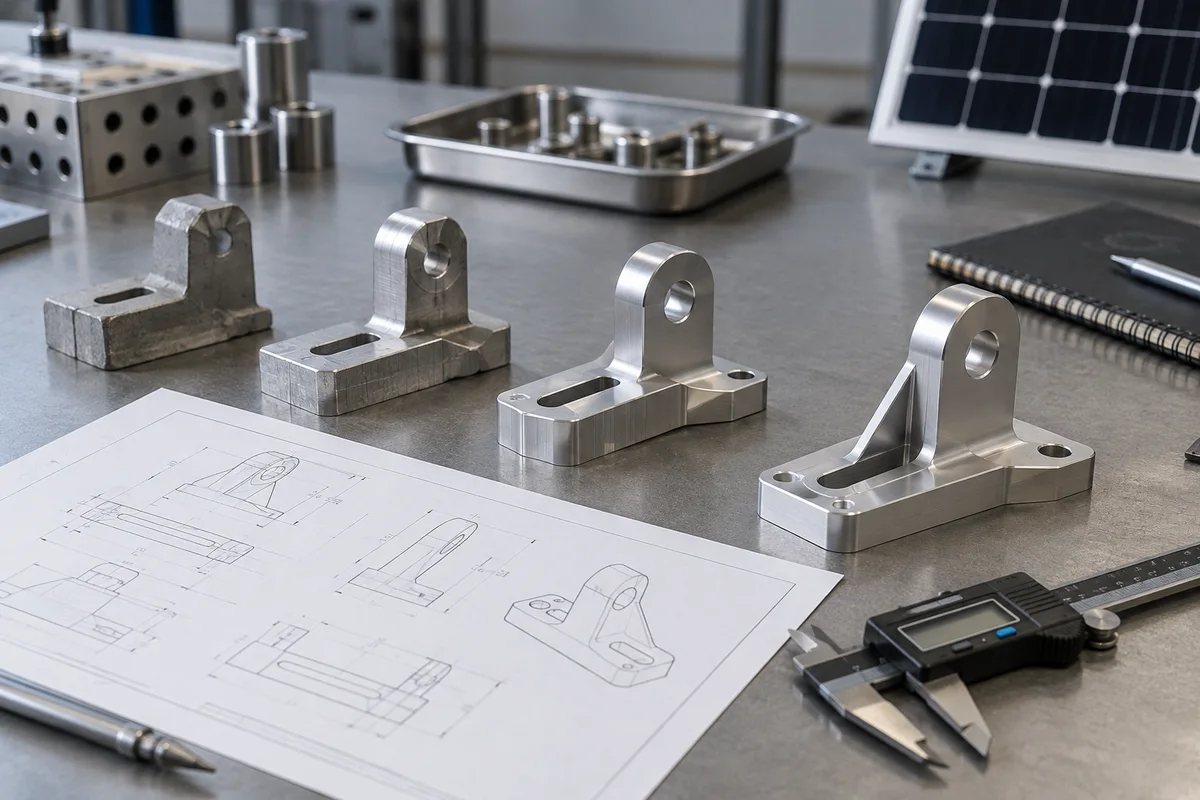
Prototyping & Short Runs

Prototyping & Short Runs

Rapid prototyping and short production runs for a design that needs field validation before a full order.

Field validation before committing to volume

Field-validate before committing to volume

A prototype run gets a design onto a real site for validation before hundreds or thousands of units are fabricated against a spec that hasn't been tested yet.

Fast turnaround on small quantities

Prototype and short-run quantities move through fabrication on a faster timeline than a full production order, since tooling and process are simpler at low volume.

A clear path to full production

Prototype specs and lessons learned carry directly into a full production run once a design is validated, without starting the fabrication conversation over.

Catch issues early, scale without restarting

Catch design issues before full production

Field validation on a prototype surfaces a fit or durability issue before it's built into a thousand-unit run.

Move from prototype to production without restarting

Validated specs carry forward into full-volume fabrication instead of a fresh design cycle.

Guides for your next decision

Your questions, answered.

When does a solar project need custom fabrication instead of catalog components?
Custom fabrication makes sense when a catalog part does not fit the site, the geometry, or the load, common with odd bracket angles, non-standard enclosures, specific cable lengths, or skid-mounted assemblies. Rather than forcing a stock part or field-modifying it, a part built to spec fits correctly and keeps the install clean. Sunhub handles brackets, enclosures, cable assemblies, and skids when the catalog runs out.
Can fabricated parts be certified to the same standard as catalog equipment?
Yes. Custom parts can be built and certified to the same applicable standards as catalog equipment, whether that means UL-listed enclosures, code-compliant cable assemblies, or documented material specs. Certification is part of doing it right, not an afterthought. Confirm the specific listing your AHJ or IE requires and it can be built into the fabrication scope.
What's the typical lead time for a custom fabrication run?
Lead time depends on part complexity, material availability, finishing like powder coating, and run size, so a simple bracket turns faster than a skid-mounted assembly. Prototyping and short runs are handled differently from production quantities. Share the drawing or spec and the fabrication team can give you a firm lead time for that specific part.
When does a project need a custom bracket instead of a catalog part?
A custom bracket makes sense when the attachment geometry, angle, spacing, or structural connection does not match any catalog part, forcing you to otherwise redesign the array around the hardware. Fabricating to the actual geometry is usually cleaner than compromising the layout. Sunhub makes brackets to a project's specific attachment points when a stock part won't fit.
What materials are used for custom solar mounting brackets?
Custom brackets are typically fabricated from steel or aluminum, with the alloy, thickness, and finish chosen for the structural load and the site's exposure. Galvanized or coated steel and anodized aluminum are common where corrosion resistance matters, such as coastal or high-moisture sites. Sunhub matches material and finish to the actual site conditions.
More questions about these services
How long does a custom bracket fabrication run typically take?
Lead time depends mainly on run size, material availability, and finish, so a small batch turns faster than a large production run. Sunhub quotes the lead time against the actual quantity rather than a generic estimate, so you know the real timeline before committing to the fabrication.
What NEMA rating does an outdoor solar enclosure typically need?
Outdoor solar enclosures commonly use NEMA 3R at a minimum for rain and weather protection, with NEMA 4 or 4X specified where washdown, dust, or corrosion is a concern. The right rating depends on the site's actual environment, including coastal salt air or heavy dust. Matching the rating to real conditions is better than defaulting to a catalog box.
Can an enclosure be custom-sized for non-standard equipment?
Yes, enclosures can be built to the dimensions the equipment inside actually requires rather than forcing gear into a stock box. Custom sizing avoids the field modifications that a catalog enclosure often needs. It also keeps clearances and knockouts appropriate for what is being installed.
Do custom enclosures carry the same certifications as catalog products?
Custom-fabricated enclosures can be built and certified to the same standards inspectors expect, so a custom size does not mean skipping certification. Confirm the applicable listings for the enclosure and its NEMA rating before ordering. That keeps the enclosure ready for inspection instead of raising a red flag.
When does a project need a custom cable assembly instead of standard PV wire?
A custom assembly makes sense when the routing calls for specific lengths, connectors, or a harness that standard PV wire would require field splicing to achieve. Pre-terminated, cut-to-length assemblies cut splice points and leftover cable, which reduces failure points and install labor. Sunhub builds them to the project's actual routing and confirms connector compatibility before they ship.
What connector types are available for custom cable assemblies?
Assemblies can be built with common industry connectors matched to the modules, inverters, and combiners on the project, including MC4 and compatible types, along with harness configurations for paralleling strings. Because connector families are not always cross-compatible, Sunhub confirms the exact connector against the equipment before the assembly ships.
Are custom cable assemblies certified for outdoor and rooftop use?
Yes. Assemblies are specified with cable and connectors rated for the environment they are installed in, including sunlight, wet, and rooftop exposure, so they hold up to outdoor conditions and code requirements. The specific certifications are matched to the application, and Sunhub confirms the right rating for the installation before building the harness.
What equipment is typically skid-mounted for solar projects?
Skid-mounting is common for the balance-of-system electrical equipment that would otherwise be assembled in the field, such as inverters, transformers, switchgear, combiner and distribution gear, and controls, and sometimes battery storage. These components are integrated onto a common frame or into a container in the shop so the skid arrives ready to set and connect. The exact mix is built around the project.
How much field assembly time does a pre-integrated skid save?
Because the integration, wiring, and testing happen in the shop instead of on site, a pre-integrated skid can cut field assembly time substantially, arriving ready to set and connect rather than built up piece by piece. The actual savings depend on the scope packaged onto the skid and site conditions, but the biggest gains show up on tight schedules and repeat deployments.
Can a skid be customized for a specific project's equipment mix?
Yes. Skids are built around the project's own equipment mix rather than a fixed configuration, so the inverters, transformers, switchgear, and any storage are integrated to match what the design calls for. Standardizing that configuration also makes repeat deployments easier to reproduce across sites.
When does solar racking need coating beyond standard galvanization?
Standard galvanization handles many inland environments, but harsher exposure, coastal salt air, high humidity, industrial or agricultural atmospheres, and aggressive soils, often calls for additional coating to hit the intended service life. Dissimilar-metal contact and specific warranty durability targets can also drive the decision. Matching the coating to the site's actual corrosion exposure, rather than a default finish, is what protects the hardware over decades.
What coating options exist for coastal or high-corrosion sites?
Common approaches for aggressive environments include powder coating over a prepared or pre-galvanized surface, duplex systems that pair hot-dip galvanizing with a coating, and higher-grade material selection where appropriate. The right choice depends on the alloy, the corrosion category of the site, and the warranty being claimed. Specifying the system against the actual exposure, then documenting it, is what stands behind durability claims later.
Does coating affect a racking system's structural warranty?
It can, in both directions. Applying coating improperly or altering hardware outside the manufacturer's guidance can void a structural warranty, while a correctly specified and documented coating often supports the durability claims a warranty depends on. The key is applying the coating to the project's actual hardware in a way that stays within manufacturer requirements and keeping the documentation to prove it.
Why prototype a custom part before ordering a full production run?
A prototype lets you field-validate a custom design before committing capital to volume, so you catch fit, tolerance, or performance issues while they are still cheap to fix. Correcting a problem on one unit is far less costly than discovering it across a full production run.
What's the typical turnaround for a prototype versus a full run?
Prototypes and short runs are built for fast turnaround on small quantities, so a working sample lands well ahead of a full production order. Exact timing depends on part complexity, materials, and tooling, but the prototype stage is deliberately quicker so validation does not hold up the project.
Can a prototype be field-tested before committing to volume fabrication?
Yes. The point of the prototype stage is to field-validate a design in real conditions before committing to volume, so you can test fit and performance on site first. Once the design holds up, there is a clear path to move from prototype to full production without restarting the process.

Plan the next step for your business

Tell our team what you need, and explore the Sunhub services that fit your business.

Talk to a specialist