 ®
Give suppliers a clear request
A clear request helps suppliers assess the opportunity. Response times depend on the equipment, availability and participating suppliers.
Sunhub business platform
Post an equipment need once and verified suppliers compete for it, with net terms, freight and warehousing arranged on the same order.

RFQ engine, financial services, freight and drayage, and warehousing and third-party logistics connected to the same solar equipment order.
A clear request helps suppliers assess the opportunity. Response times depend on the equipment, availability and participating suppliers.
Net terms, escrow status and freight details live on the order record itself, which is what keeps an invoice matching the terms a buyer actually approved.
Share equipment specifications, quantities and delivery needs. Review supplier responses and confirm commercial terms before proceeding.
Accept a quote, negotiate directly with the supplier, or walk away. Suppliers pay to access the marketplace and compete for the business; buyers post and compare for free.

Post a bill of materials once and let verified suppliers compete on landed cost, lead time and terms, typically within a few hours.
A single posted bill of materials reaches verified suppliers across the network at once, replacing the usual round of individual calls and emails to four or five distributors for one comparison.
Quotes come back structured for side-by-side comparison on landed cost, availability and terms, not four differently formatted PDFs that each bury shipping and duties in different places.
Review the current request terms before submitting. Compare responses and confirm pricing, delivery and payment details before accepting an offer.
Supplier response times vary with specifications, availability and project complexity. Include quantities, location and required dates to help suppliers respond.
Normalized, side-by-side quotes can cut RFQ cycle time by up to 70 percent on jobs that would otherwise mean coordinating several separate vendor conversations.
Accepting a quote moves the deal into net terms, freight and tracking on the same record, so nothing about the original bill of materials needs re-entering.

Apply once for reusable trade credit, then use that approved line across every participating supplier, with milestone escrow protecting larger deals.
A single credit application produces terms usable across every participating supplier on the platform, instead of a separate credit application and approval wait for each new vendor relationship.
Milestone-based escrow holds funds until agreed conditions, delivery confirmation or inspection, are met, which matters most on container-scale or multi-phase orders where neither side wants to be first to release money or goods.
Reusable net terms mean a growing supplier relationship doesn't require re-underwriting every few months, and escrow means a large order doesn't have to be paid in full before it ships.
One approved credit line carries across every participating supplier instead of a fresh application each time.
Escrow milestones mean capital isn't fully committed before delivery and inspection conditions are actually met.
Net terms and escrow status show on the order record itself, alongside freight and tracking, so financing terms and shipment status never end up out of sync.

Negotiated lanes, liftgate service and delivery time windows, coordinated for solar equipment specifically, not booked as generic freight.
Panel, inverter and battery shipments carry specific packaging, weight and damage-risk profiles that differ from general freight, and lane rates reflect that instead of a generic LTL quote. That specificity keeps a freight line item from becoming the surprise on a project budget.
Liftgate service and scheduled time windows get arranged for sites without a loading dock, which covers most active job sites and a fair number of distributor yards. Getting this wrong means a pallet sitting on a truck because nobody on site can unload it.
Container drayage from port of entry to a warehouse or cross-dock facility gets coordinated as part of the same booking, instead of a separate broker relationship a buyer has to manage.
Liftgate and time-window requirements get set at booking, not discovered when a truck arrives at a site with no dock.
Lane rates reflect solar equipment's real packaging and handling requirements instead of a generic freight class guess.
Freight status feeds the same order record as warehousing and terms, so a buyer checks one screen instead of a separate carrier tracking number.
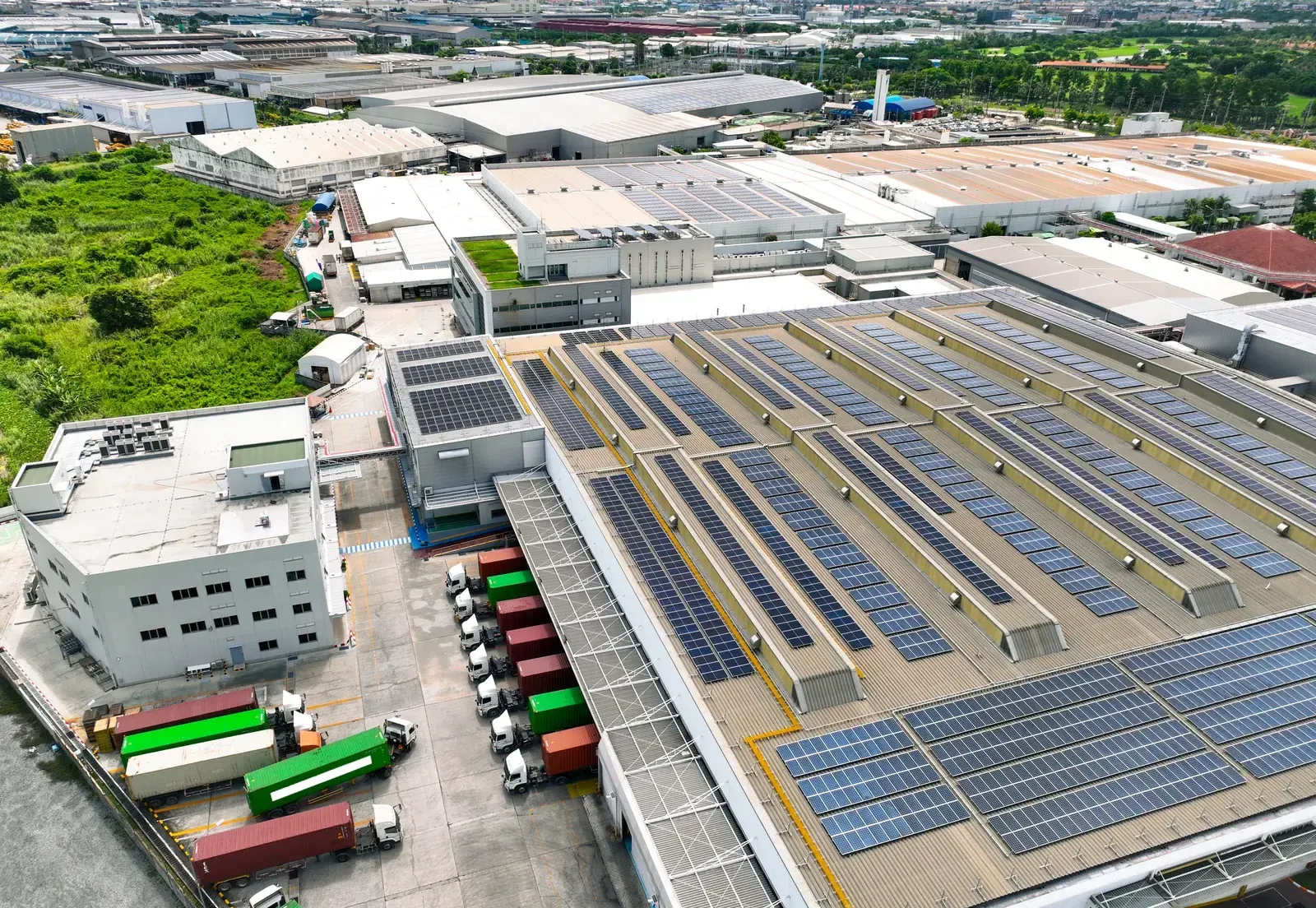
Forward-stocking and project kitting that position equipment closer to the job site and land as one delivery instead of staggered partial shipments.
Equipment positions in warehousing closer to where a project is actually being built, cutting the lead time on a rush reorder from a cross-country shipment down to a regional one.
A full bill of materials for a specific project kits together into one coordinated delivery, instead of modules, racking and BOS components arriving on three different trucks on three different days.
Warehousing and third-party logistics coordination runs through the same order record as the rest of fulfillment, so a buyer isn't separately managing a warehouse relationship on top of the supplier relationship.
Forward-stocked inventory near active project regions turns a rush reorder into a regional delivery instead of a cross-country one.
Kitting a full project's bill of materials together means a crew isn't waiting on the last truck of three to start work.
Kitted and forward-stocked inventory moves through the same freight coordination and tracking as any other order, so a buyer sees one status, not a separate warehouse update.
Tell our team what you need, and explore the Sunhub services that fit your business.